PixelVision · iOS & Android
SnapPrice AI
Scatta. Valuta.
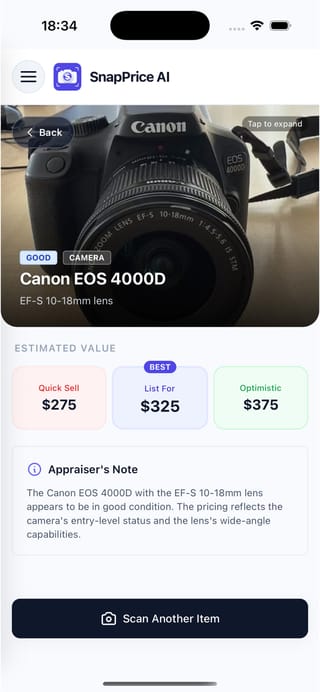
Punta la fotocamera su qualsiasi oggetto usato e ottieni un prezzo di rivendita a tre livelli - Quick Sell, List For, Optimistic - fuso da 17 marketplace live in pochi secondi.
iOS + Android · Gemini Vision · 17 marketplace
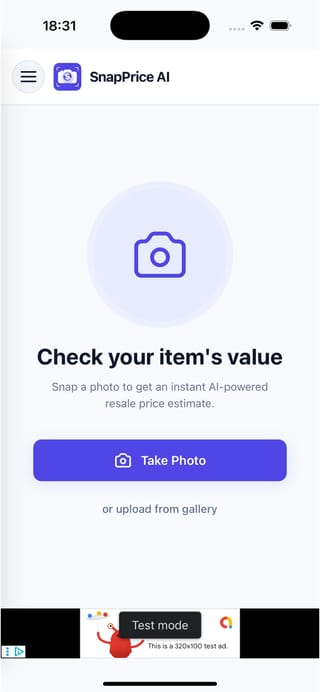
Un solo numero è un'ipotesi.
Ogni altra app di rivendita ti dà un unico "prezzo di mercato" e si ferma lì - ma il prezzo giusto dipende interamente da quanto velocemente devi vendere. SnapPrice legge l'oggetto, controlla il mercato live e ti dà l'intero range: un minimo per la vendita rapida, un prezzo di listino supportato dai dati e un tetto per chi ha pazienza. La scelta resta tua.
La pipeline
Da una foto a tre prezzi
Gemini Vision riconosce l'oggetto; un blend di marketplace live lo valuta; il risultato è un range, non un'ipotesi.
La cattura
Scatta, conferma, valutato
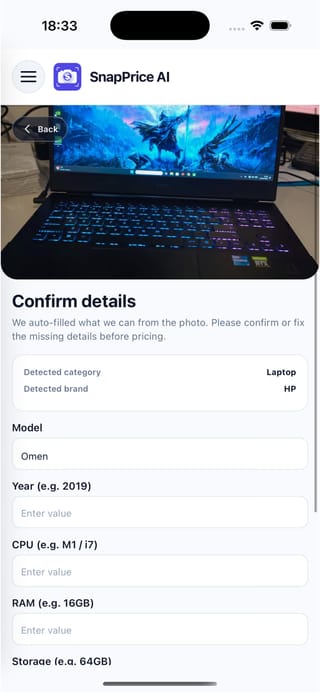
Punta la fotocamera su qualsiasi oggetto - o scegli una foto dalla libreria. Gemini Vision legge categoria, marca, modello e condizione direttamente dai pixel, senza digitare nulla.
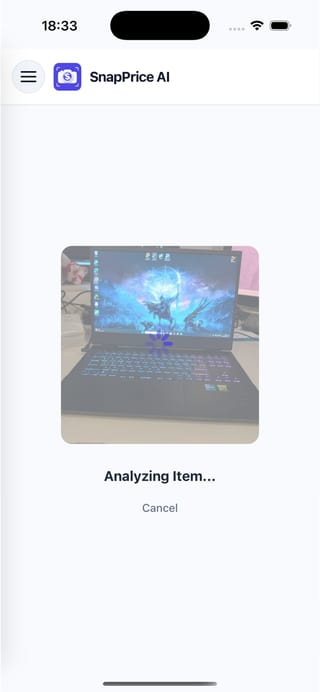
Una scheda precompilata mostra ciò che l'AI ha rilevato. Aggiungi o correggi un dettaglio per una stima più precisa - per la maggior parte degli oggetti basta un tap.
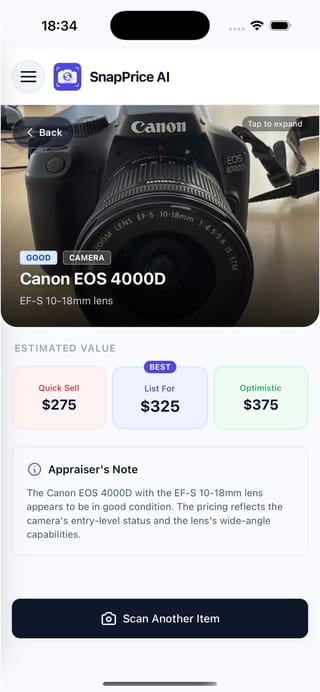
SnapPrice interroga 17 marketplace in parallelo, li fonde con la valutazione AI e restituisce Quick Sell / List For / Optimistic - più una nota dell'esperto in linguaggio naturale.
L'output
Tre prezzi, non uno
La maggior parte delle app di rivendita ti dà un unico "prezzo di mercato". SnapPrice ti dà un range - perché il prezzo giusto dipende interamente da quanto velocemente hai bisogno di vendere.
Prezzo uguale o inferiore per una vendita rapida, spesso entro 24h. Utile quando hai bisogno di liquidità veloce o l'oggetto è difficile da conservare.
Il punto ottimale supportato dai dati. Crea aspettative realistiche e attira acquirenti seri senza lasciare soldi sul tavolo.
Il tetto per i venditori pazienti in mercati con alta domanda. Migliore per oggetti rari, edizioni limitate o vintage.
Dati di mercato
17 marketplace, una sola ricerca
L'app
Costruita per come le persone vendono davvero
Sotto il cofano
Tre livelli, un tap
La pipeline è molto complessa - un modello vision, una ricerca di mercato parallela, un livello di cache, conversione valuta, normalizzazione della condizione. L'utente vede un pulsante fotocamera e un prezzo.
Identifica categoria, marca, modello e condizione dalla foto - elettronica, moda, mobili, strumenti, articoli sportivi e altro.
Query parallele su 17 provider, filtrate per paese, condizione ed età del listing, poi normalizzate e fuse con la valutazione AI tramite media ponderata.
Una cache da 7 giorni indicizzata per marca + modello + paese + condizione. Le ricerche ripetute tornano istantaneamente; il tasso di hit sugli oggetti popolari supera l'80%, mantenendo i costi API sostenibili.
Cosa abbiamo imparato
L'astrazione giusta vince
La decisione più difficile è stata quante cose mostrare all'utente. Tutto ciò che sta sotto - il modello vision, la ricerca di mercato, la cache, i calcoli di valuta - esiste per servire una sola schermata: una foto in entrata, un prezzo in uscita. Ogni decisione ingegneristica è stata presa al servizio di quella semplicità.